

Technology
IsoFlare: coaxial geometry and listening
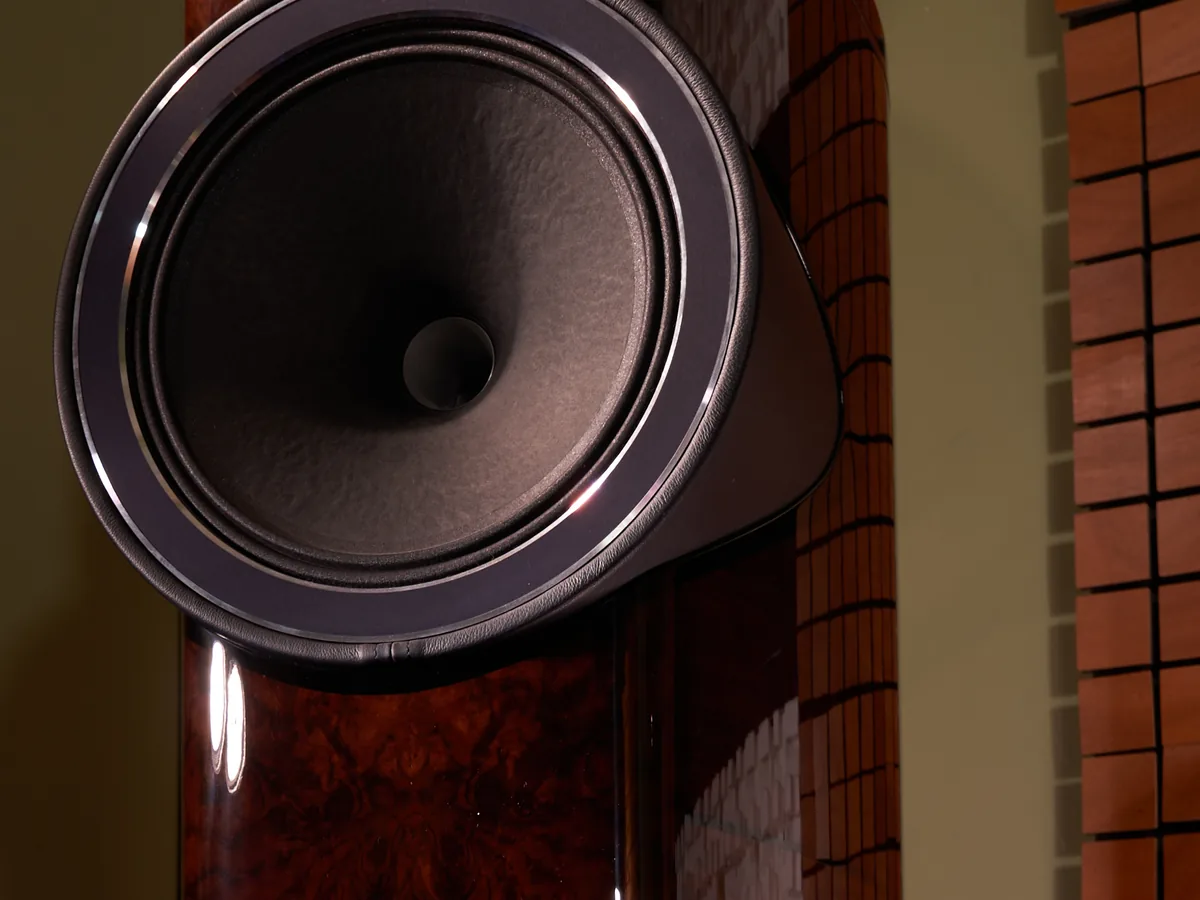
IsoFlare places the high-frequency unit at the centre of the bass/midrange cone. The geometry aims to bring both ways towards a common source; the crossover, waveguide and room also shape the result.
Official source: fyneaudio.com · Reviewed: 2026-11-09
- LF / MF
- Bass / midrange
- HF
- Treble
- +
- Shared centre
Schematic front view of the arrangement. It is neither a model-specific cutaway nor a measured dispersion plot.
What “point source” means
Coaxial means the drive units share an axis. Coincident describes the intention to bring their acoustic centres close together. A point source is an idealised model: a real loudspeaker has dimensions and its behaviour changes with frequency.
Reducing the spacing between the ways addresses one geometric cause of path-length differences as the listener moves in height or angle, particularly where the drivers overlap. This is a potential integration benefit, not a guarantee of perfect time alignment.
Dispersion: the aim and the evidence
The cone and high-frequency waveguide help shape radiation. Fyne associates IsoFlare with a wide listening area and stable imaging. To establish how well a particular model preserves tonal balance off axis, look for horizontal and vertical response curves, especially around the crossover.
An upper-frequency limit or driver diameter does not reveal those curves. Nor does it certify identical response at every seat: stereo geometry and reflections still change with position.
Engineering trade-offs remain
The crossover determines how the two ways combine; waveguide geometry, acoustic phase offsets and diffraction also matter. Coaxial designs must also manage the interaction between cone movement and high-frequency radiation.
These are general design considerations, not measured faults in a particular Fyne loudspeaker. Their magnitude, audibility or advantage over another design cannot be assigned without comparable model-specific measurements at relevant levels.
One principle, different implementations
F500E uses titanium high-frequency diaphragms; F500S and F500 SP use magnesium. The F500S and F500SP standmounts both specify a 150 mm IsoFlare assembly with a 25 mm high-frequency unit, but belong to different families.
IsoFlare also appears in F700/F700SP, F1 and Vintage. Sharing the technology name does not make the drivers, crossover or bass loading identical across those ranges. Check the exact model’s specification.
What to check at a listening session
Start with the height and orientation in the model manual. Compare a centred voice from the main seat and a second position without changing level. That tells you what you hear in that installation; it does not replace a directivity measurement.
- Look for measurement conditions alongside response and sensitivity figures.
- For published dispersion data, check frequency, reference axis and measurement angles.
- Assess the result with placement you can actually use at home.
Move from the principle to an exact model
The selection guide connects format, distance and amplification. If you already have a shortlist, provide the amplifier model and installation dimensions to discuss the next step.
Related series
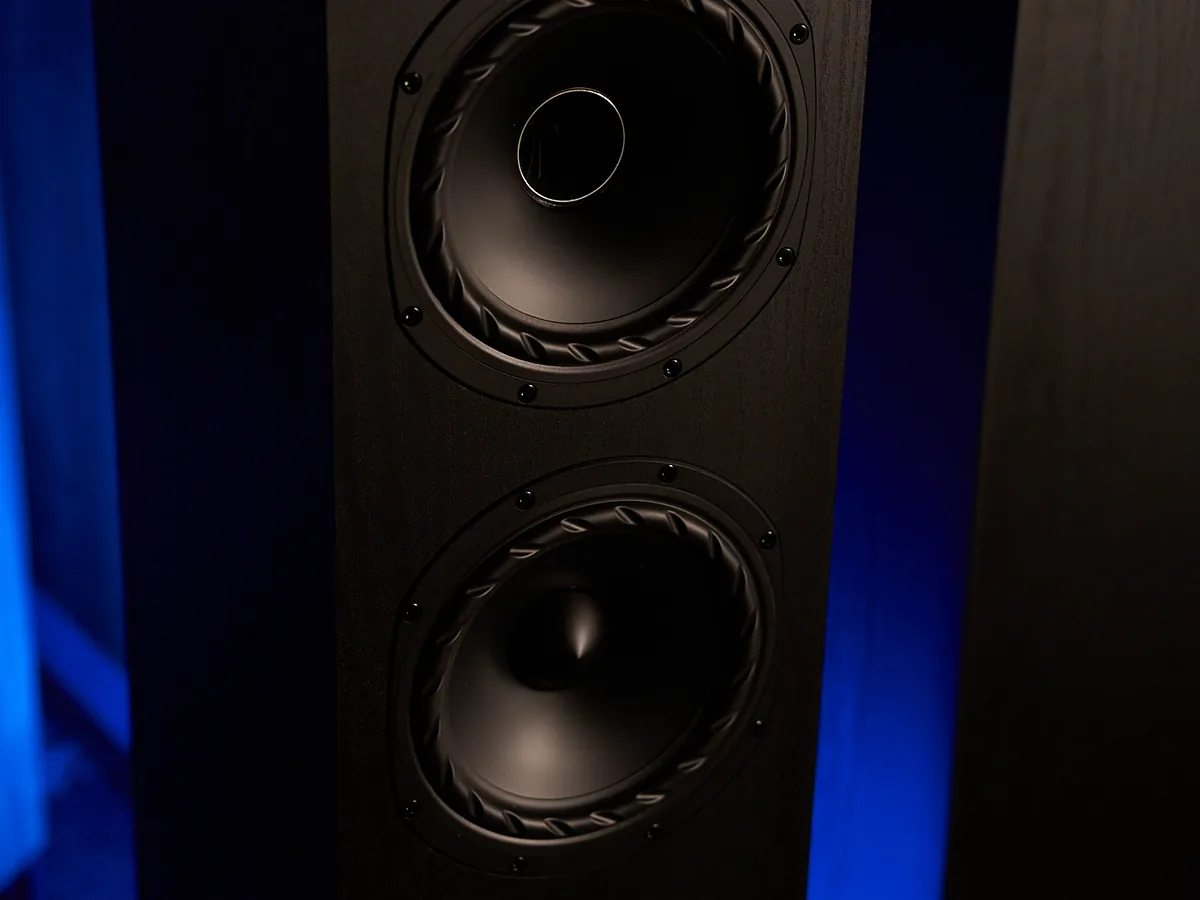
F500E
The F500E series brings Fyne Audio's IsoFlare point source driver to a more accessible level—"IsoFlare Everywhere"—with bookshelf monitors, floorstanding speakers, and LCR speakers for creating coherent high-fidelity and home cinema systems.
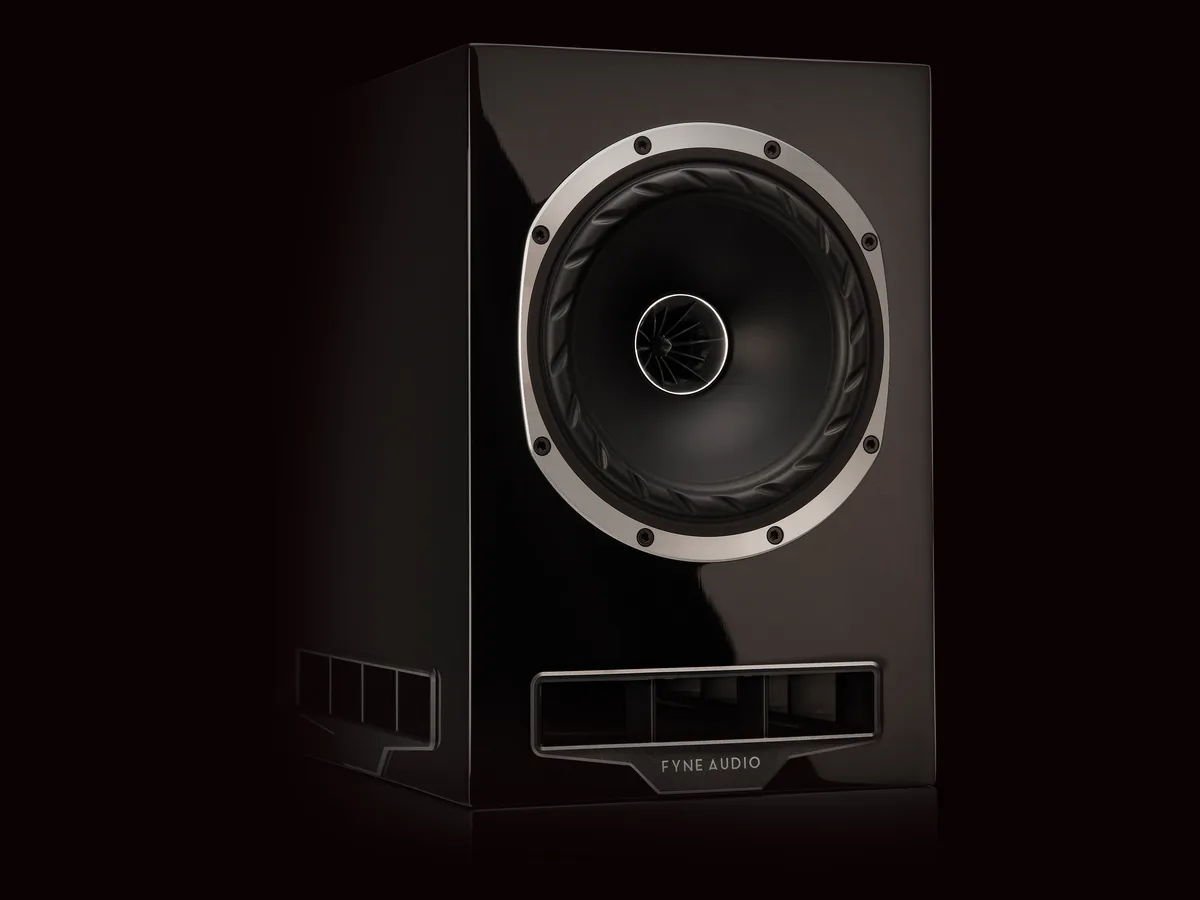
F500S
Successor to the F500 range, the F500S series comprises monitors and floorstanders for two-channel listening and home cinema, featuring the latest evolution of the IsoFlare point source driver.
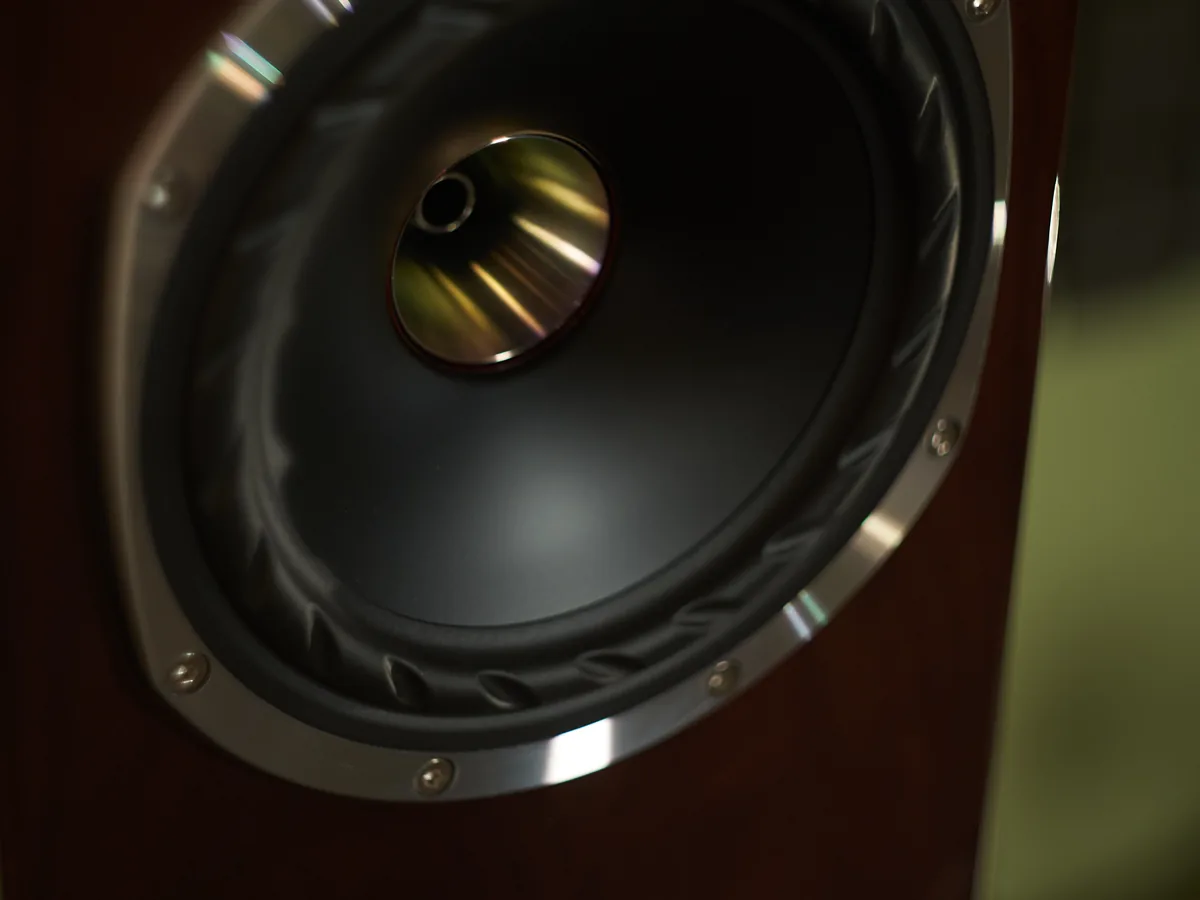
F500 SP
The F500 SP series is the special production edition of the F500 family, handcrafted in the United Kingdom: it combines technology from the F700 series with the classic cabinet of the F500. It includes the F500SP monitor, the F501SP and F502SP floorstanders, and its dedicated FS6 stand (discontinued), for high fidelity.
F700
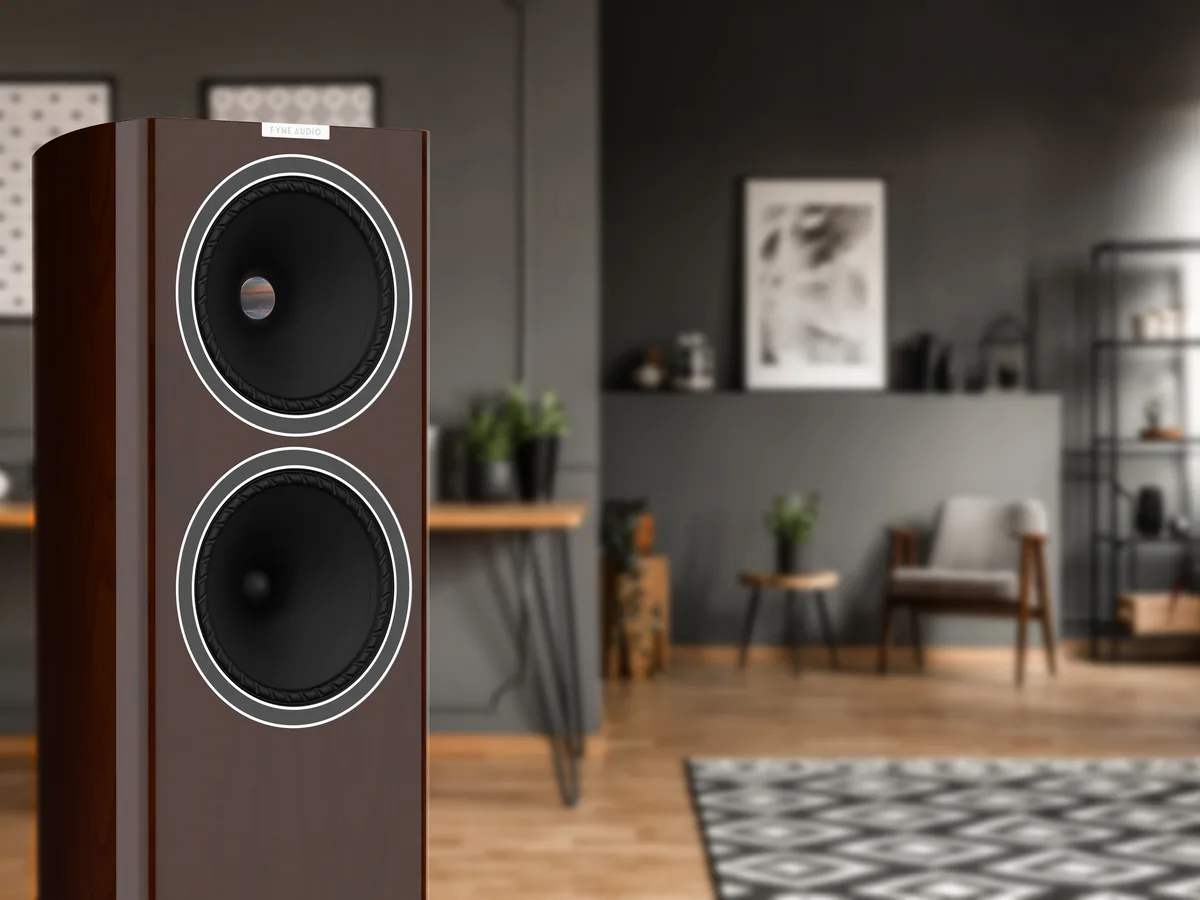
The F700 series distils the technology of the flagship F1 range into a more accessible contemporary high-fidelity design: five models — the F700 monitor, the F701 standmount monitor, and the F702, F703, and F704 floorstanders — featuring IsoFlare point source drivers, BassTrax diffuser, and their dedicated FS8 stand.
F700SP
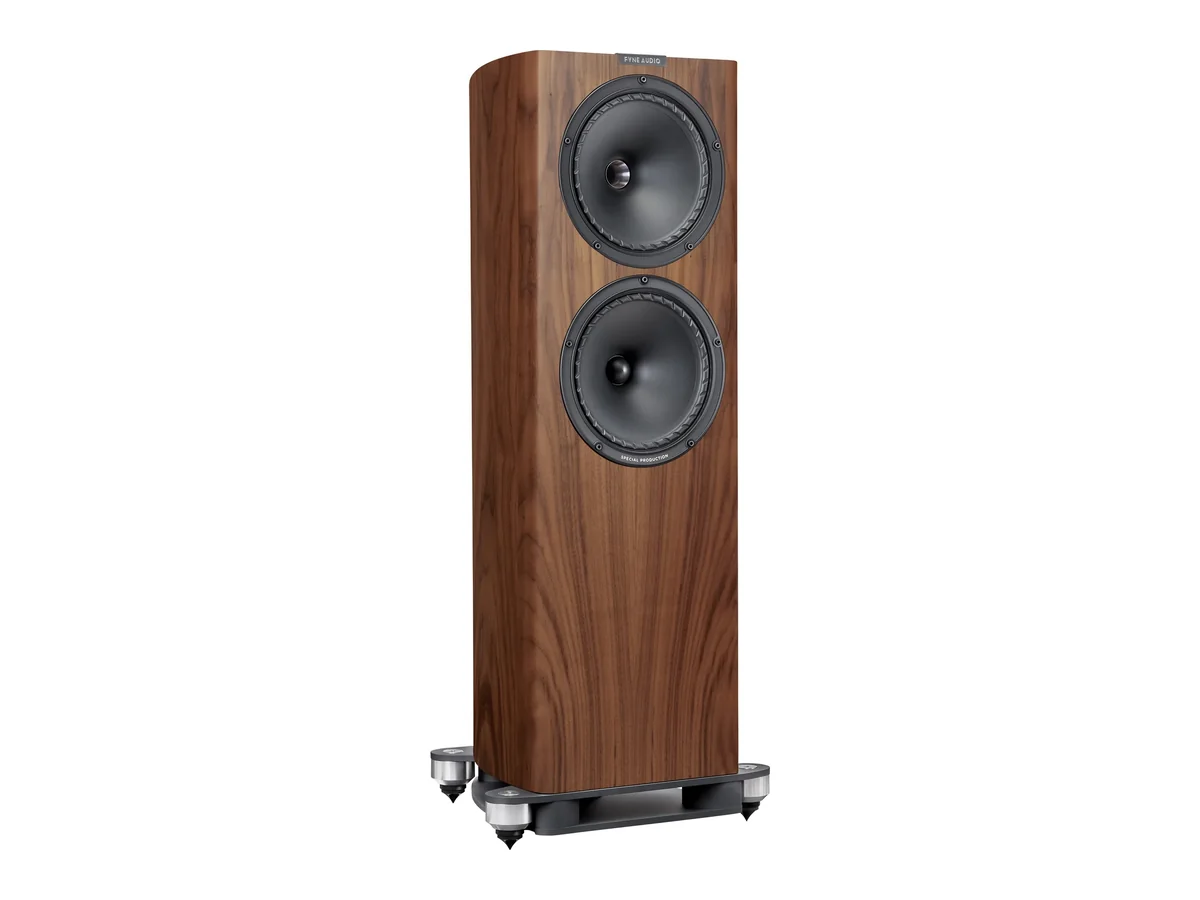
The F700SP series is the special production edition of the F700 family, developed by Dr Paul Mills' team: the F701SP standmount monitor and the F702SP, F703SP, and F704SP floorstanding models, featuring IsoFlare drivers derived from the F1 series, F1-grade aluminium platform, and a high-end crossover.
F57SP
The F57SP series is a special cinema production: premium centre channel loudspeakers crafted in the United Kingdom, optimised for dialogue and integrated with the main F500SP and F700 loudspeakers. It includes the F57SP-6 (150 mm) and the F57SP-8 (200 mm), compatible with the FS5 stand.
F1
The F1 series comprises the F1-5 bookshelf monitor, the F1-8 stand monitor, and the F1-8S, F1-10S, and F1-12S floorstanding models: Fyne Audio's most advanced range for high fidelity, featuring high-end IsoFlare drivers, FyneFlute suspension, and Tractrix BassTrax loading.
Cubitt
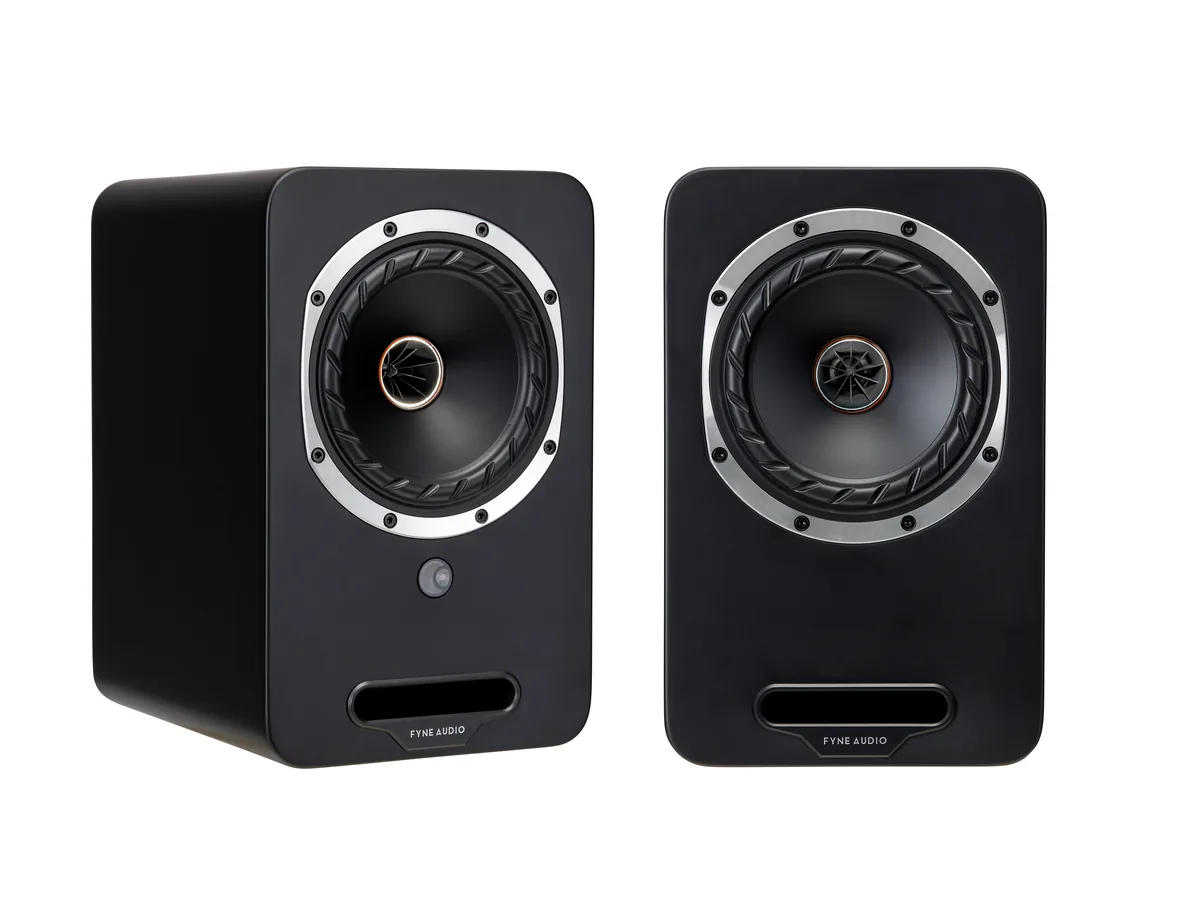
The Cubitt series brings Fyne Audio's engineering to everyday, connected listening, featuring active systems that integrate amplification, DSP, and IsoFlare drivers.
Vintage
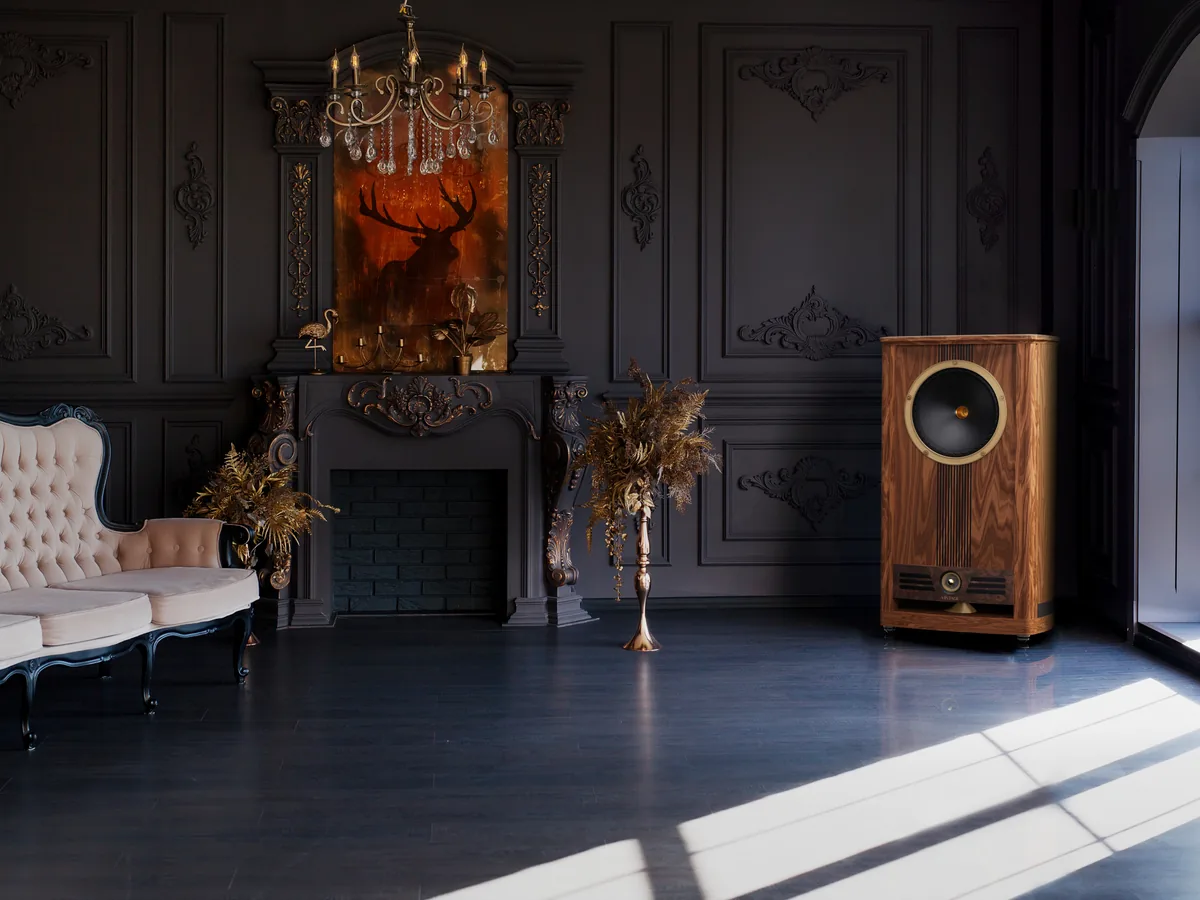
The Vintage collection merges classic British loudspeaker aesthetics with contemporary acoustic engineering, available in a bookshelf monitor and three reference floorstanding models.
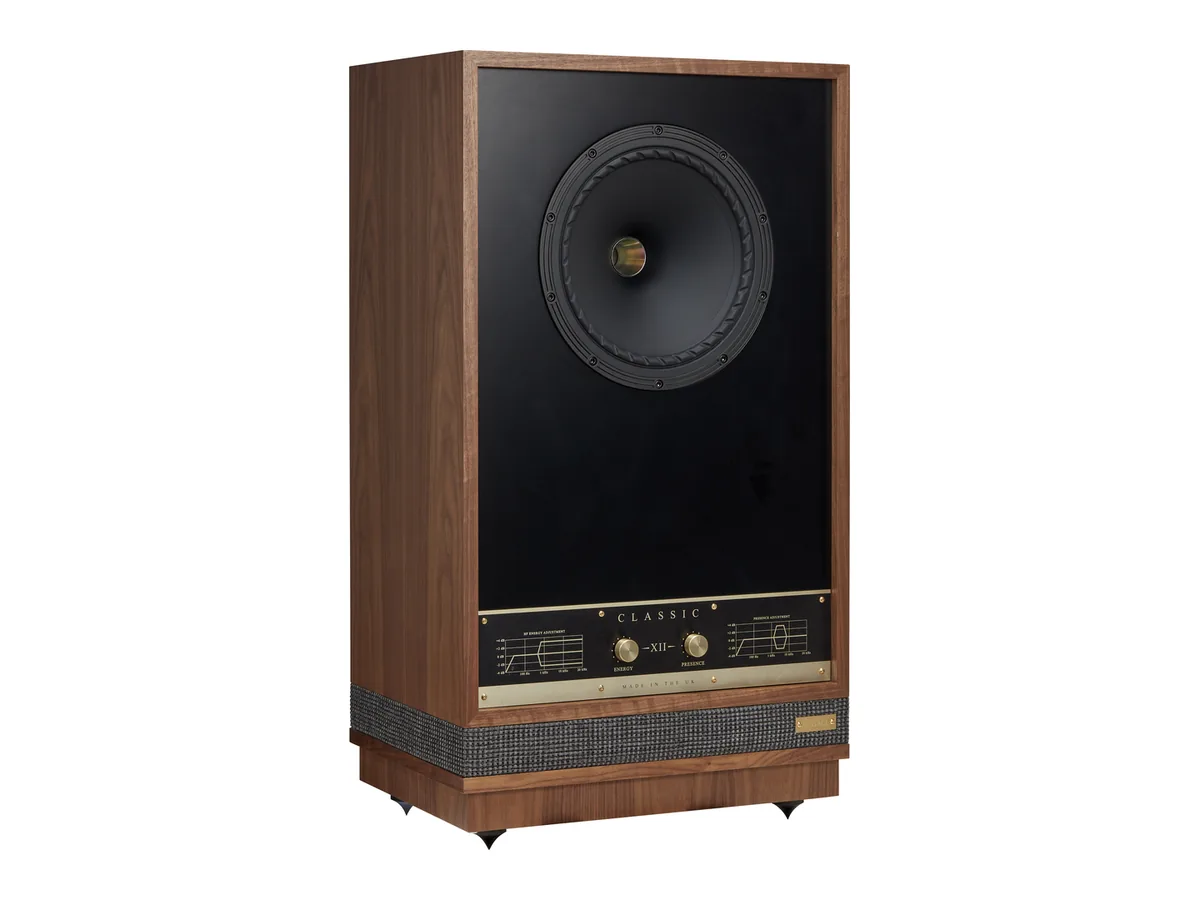
Vintage Classic
The Vintage Classic collection extends Fyne Audio's heritage concept to a broader audience: classic aesthetic rectangular cabinets—wider than they are deep, featuring a black baffle and woven fabric grille—housing contemporary acoustic engineering. It comprises a standmount monitor and three floorstanding models.
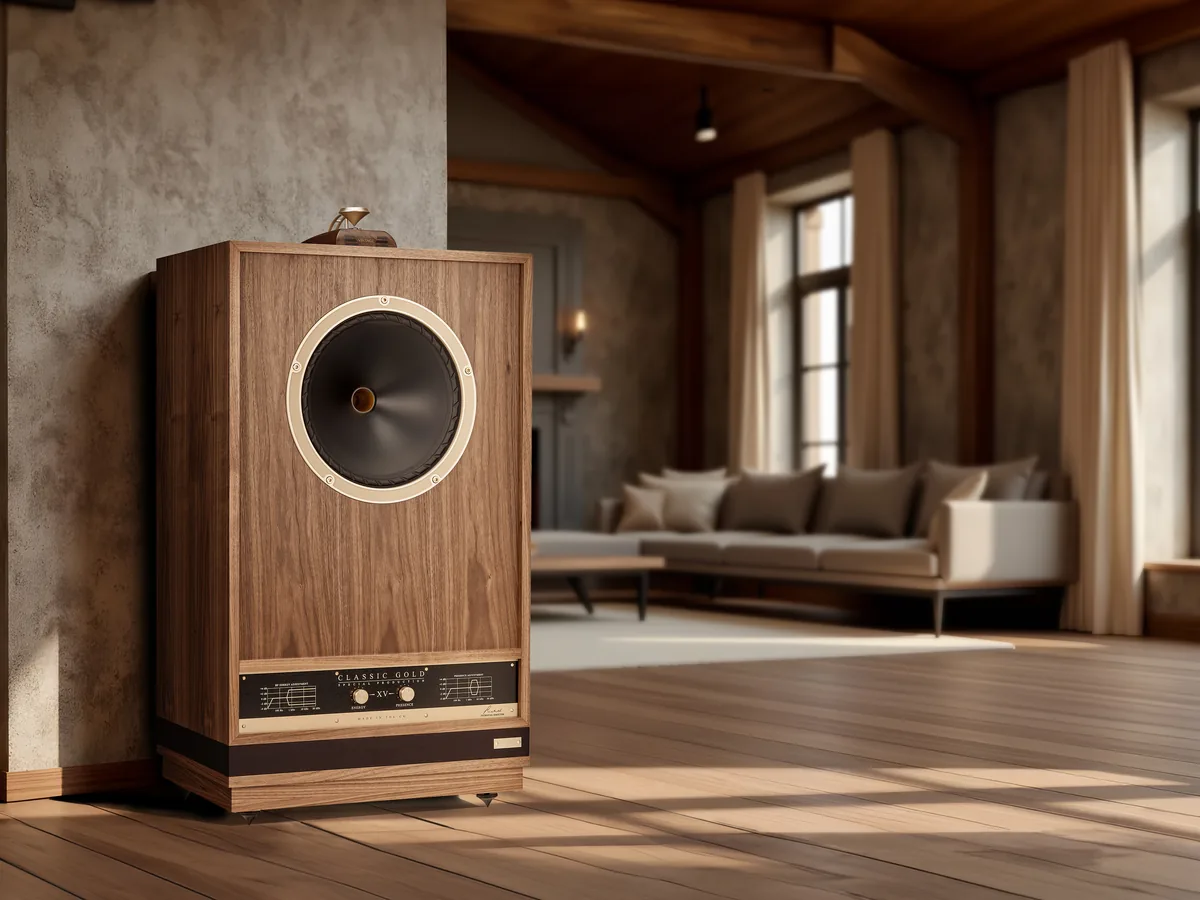
Vintage Classic Gold SP
The Vintage Classic Gold SP special edition enhances the heritage Vintage Classic collection: it retains the iconic rectangular cabinet but is constructed from high-density birch plywood and equipped with the upgraded IsoFlare drivers from the flagship Vintage range. It comprises four columns of 8, 10, 12, and 15 inches.
FA500iC
The FA500iC series is Fyne Audio's flagship installation range: in-ceiling or in-wall loudspeakers featuring the IsoFlare point source driver, including an LCR model for home cinema.