

Technology
BassTrax: port output and practical placement
BassTrax combines a downward-firing bass-reflex port with a Tractrix-profile diffuser. The assembly distributes port output around the base; response at the seat still depends on the room.
Official source: fyneaudio.com · Reviewed: 2026-11-09
- 1Downward port
- 2Tractrix diffuser
- 3Output around the base
A functional relationship, without scale or a sound-pressure prediction. The diffuser is part of the loudspeaker, not an acoustic treatment for the room.
What it physically does
The port is part of the enclosure’s bass-reflex tuning. In BassTrax its output faces a diffuser in the base rather than opening directly forwards or backwards. Fyne describes the distribution around the plinth as a 360° wavefront.
That describes port output around the loudspeaker. It does not mean that all sound is omnidirectional at every frequency, or that every part of the room receives the same bass level.
What that means for placement
Fyne presents the system as a way to reduce positioning sensitivity. This is a design aim; it does not establish a universal wall distance or justify blocking the lower outlet with shelving, furniture or a rug.
Retain the model’s intended assembly, spacers and plinth, with the outlet clear. Before buying stands, check that the top plate will not obstruct the port-output path and that the assembly is stable. Follow the model instructions for floor support.
Why walls and the listening seat still matter
Nearby boundaries can reinforce some frequencies and cause cancellations at others. Room modes produce peaks and nulls that also depend on speaker and listener positions. Changing the direction of port output does not remove those effects.
A bass-extension specification does not predict the balance at your sofa. Nor does the BassTrax name alone establish lower distortion, fewer resonances or an audible advantage over another system: those conclusions need comparable measurements.
Check the model as well as the family
F500S, F500SP and F501SP incorporate BassTrax. It is also documented in families such as F700/F700SP, F1 and Vintage, with different implementations and bases.
Not every IsoFlare loudspeaker uses BassTrax. For example, F500S LCR and F5E LCR use an auxiliary bass radiator (ABR), rather than this port-and-diffuser arrangement. Check the exact model’s bass loading.
Three checks before fixing the position
- Read the manual and keep the lower outlet clear, using the intended support and accessories.
- Compare small changes in wall distance at the same volume, then try moving the listening seat.
- Listen to several bass notes and more than one seat. If an imbalance persists, an in-room response measurement helps distinguish a local effect from a loudspeaker characteristic.
Plan the available space
Use the selection guide to compare supports, floorstanders and listening distance. To discuss an installation, send the model, a photograph or sketch, and the available clearance from furniture and walls.
Related series
F500E
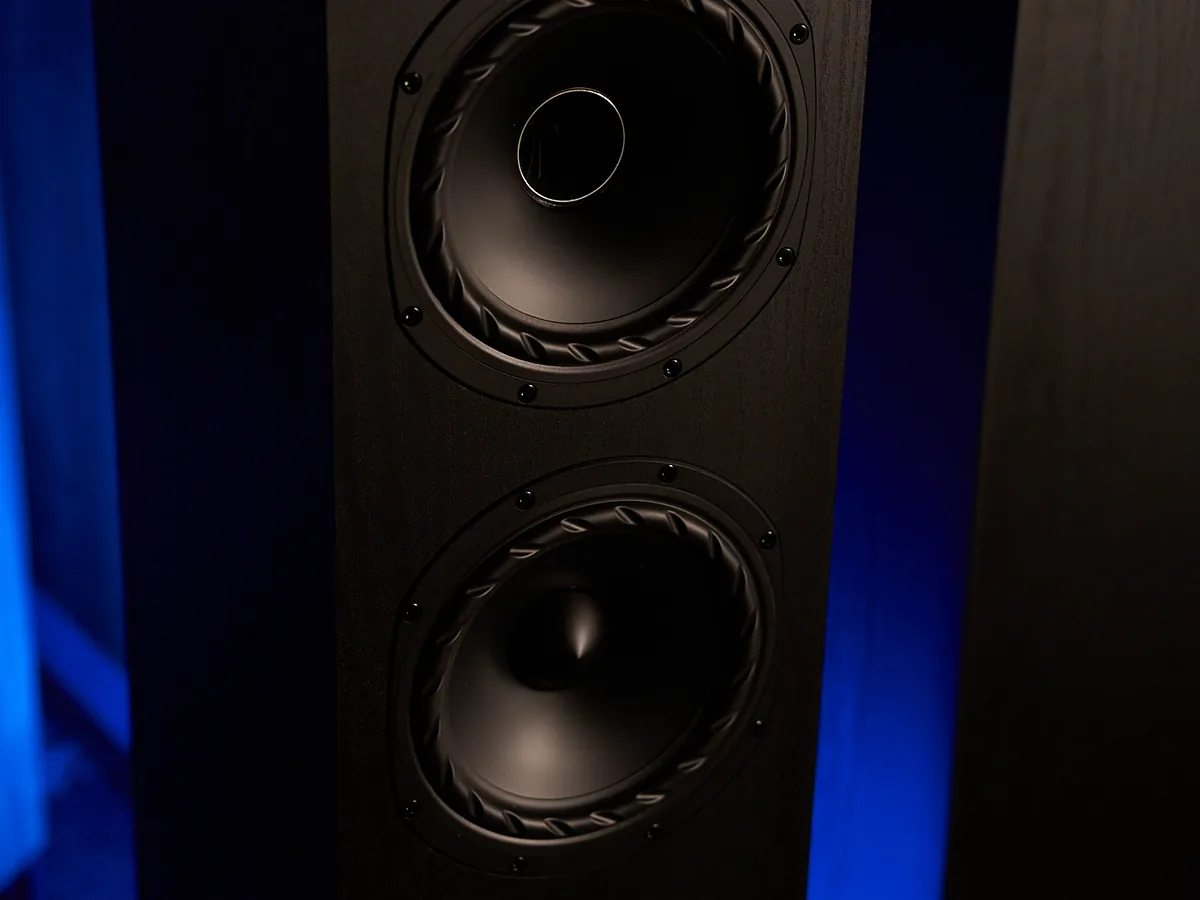
The F500E series brings Fyne Audio's IsoFlare point source driver to a more accessible level—"IsoFlare Everywhere"—with bookshelf monitors, floorstanding speakers, and LCR speakers for creating coherent high-fidelity and home cinema systems.
F500S
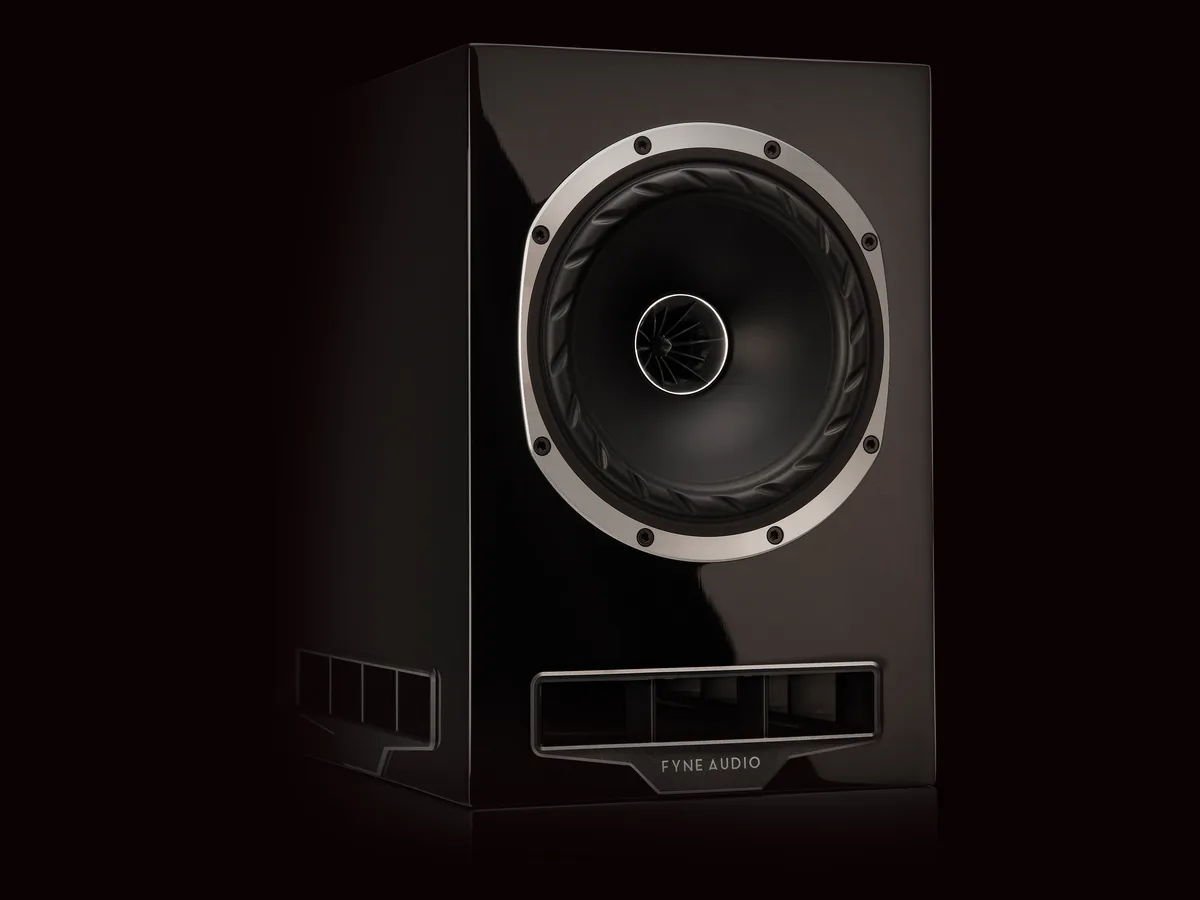
Successor to the F500 range, the F500S series comprises monitors and floorstanders for two-channel listening and home cinema, featuring the latest evolution of the IsoFlare point source driver.
F500 SP
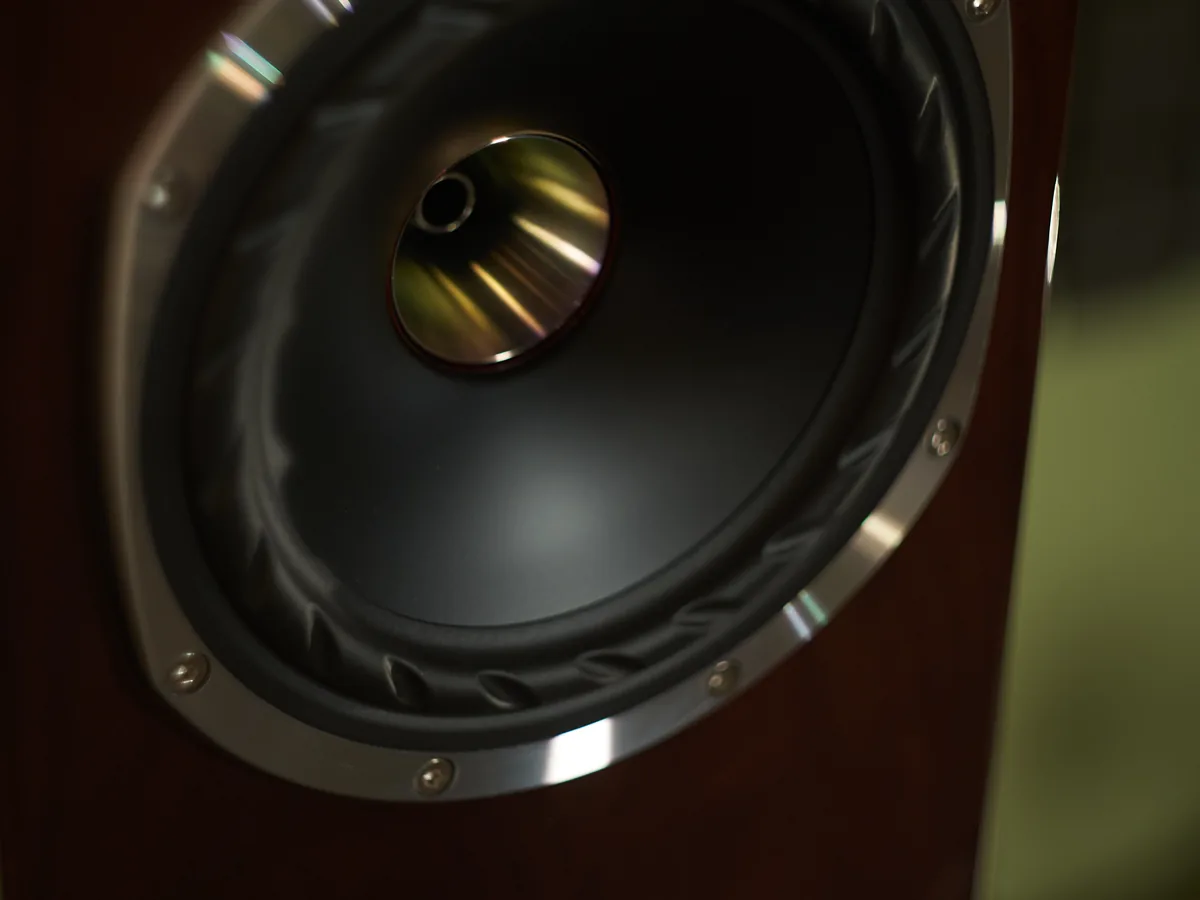
The F500 SP series is the special production edition of the F500 family, handcrafted in the United Kingdom: it combines technology from the F700 series with the classic cabinet of the F500. It includes the F500SP monitor, the F501SP and F502SP floorstanders, and its dedicated FS6 stand (discontinued), for high fidelity.
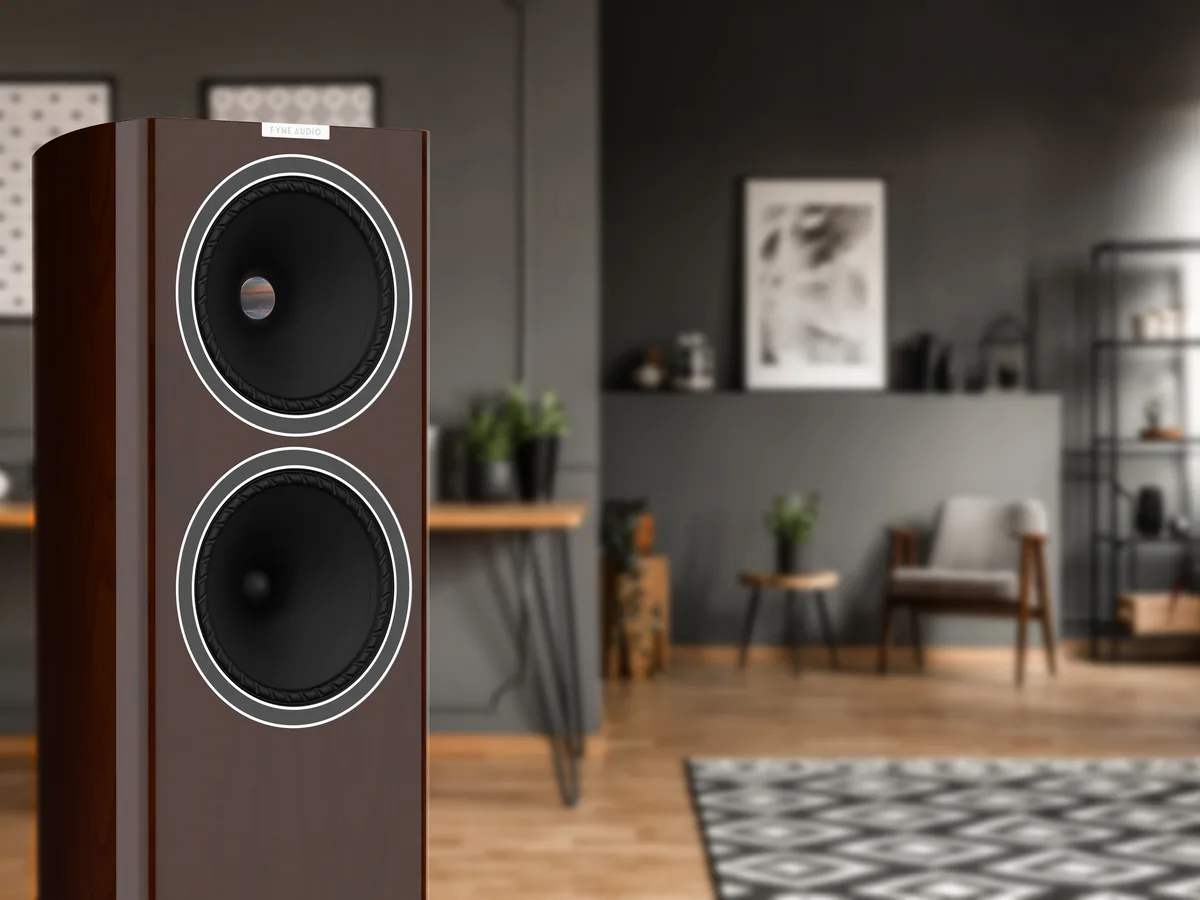
F700
The F700 series distils the technology of the flagship F1 range into a more accessible contemporary high-fidelity design: five models — the F700 monitor, the F701 standmount monitor, and the F702, F703, and F704 floorstanders — featuring IsoFlare point source drivers, BassTrax diffuser, and their dedicated FS8 stand.
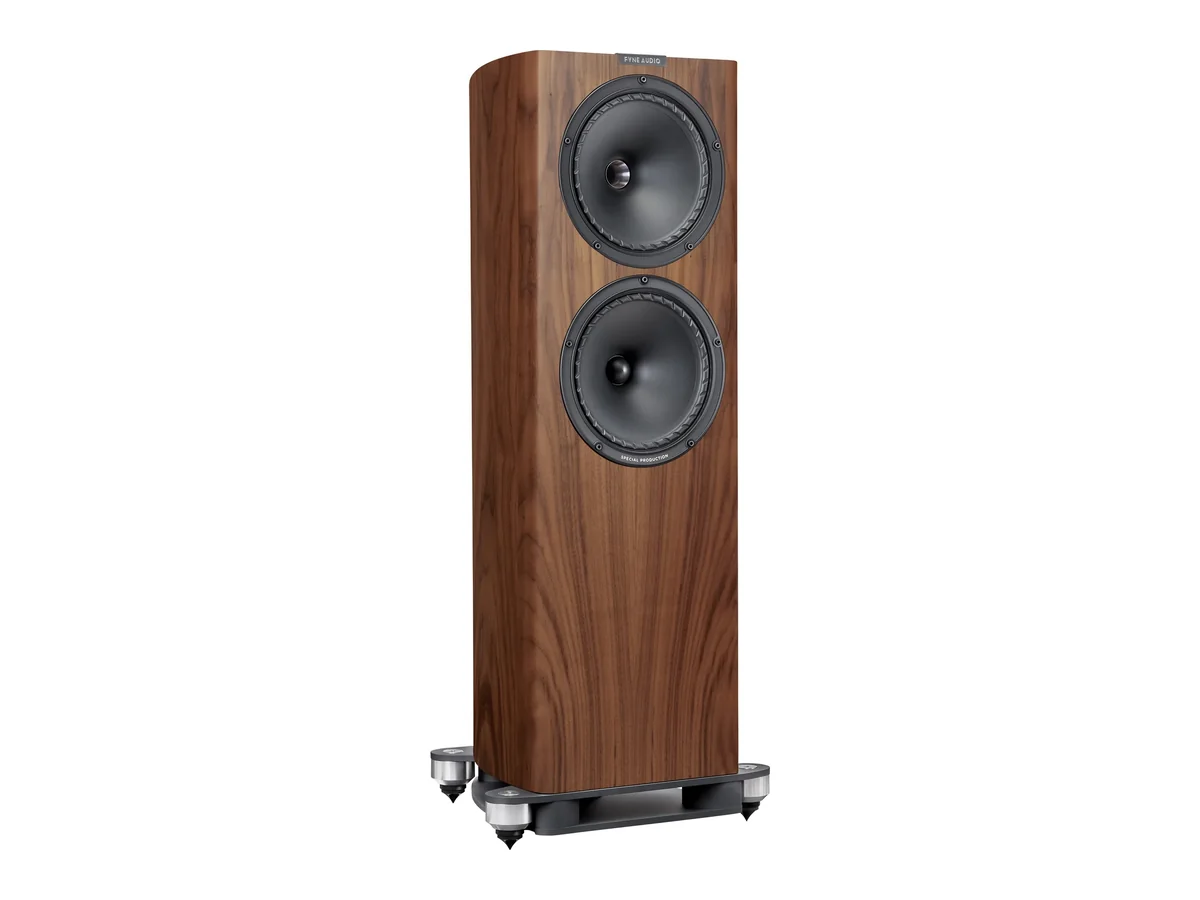
F700SP
The F700SP series is the special production edition of the F700 family, developed by Dr Paul Mills' team: the F701SP standmount monitor and the F702SP, F703SP, and F704SP floorstanding models, featuring IsoFlare drivers derived from the F1 series, F1-grade aluminium platform, and a high-end crossover.
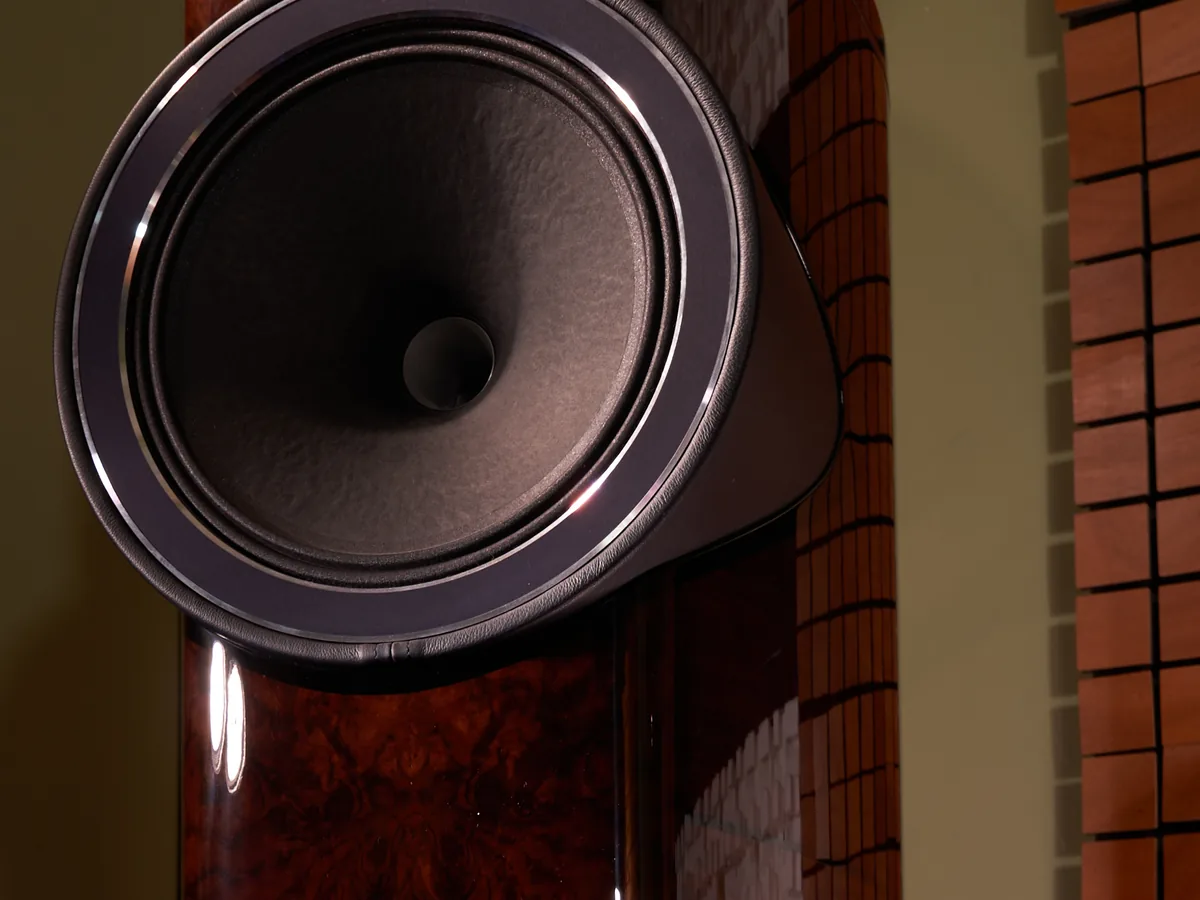
F1
The F1 series comprises the F1-5 bookshelf monitor, the F1-8 stand monitor, and the F1-8S, F1-10S, and F1-12S floorstanding models: Fyne Audio's most advanced range for high fidelity, featuring high-end IsoFlare drivers, FyneFlute suspension, and Tractrix BassTrax loading.
Vintage
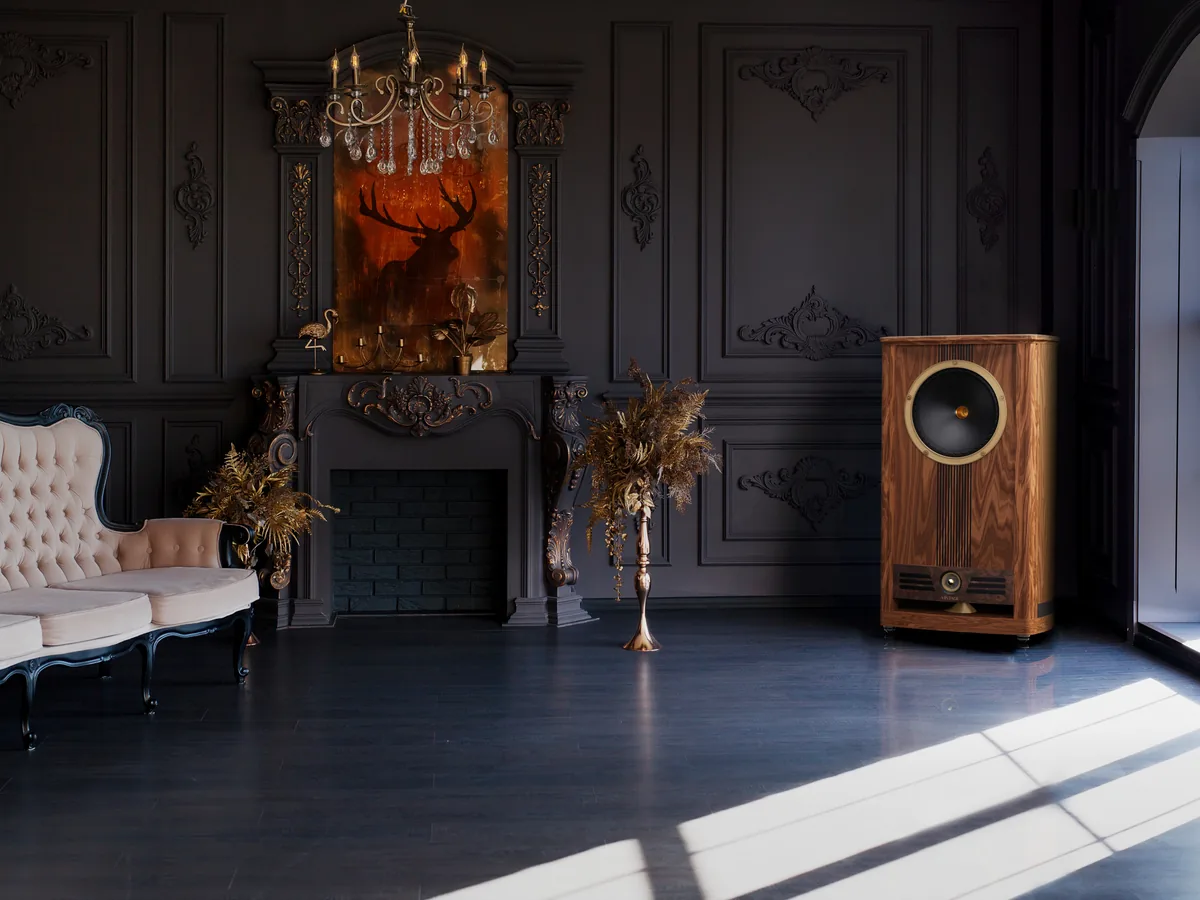
The Vintage collection merges classic British loudspeaker aesthetics with contemporary acoustic engineering, available in a bookshelf monitor and three reference floorstanding models.
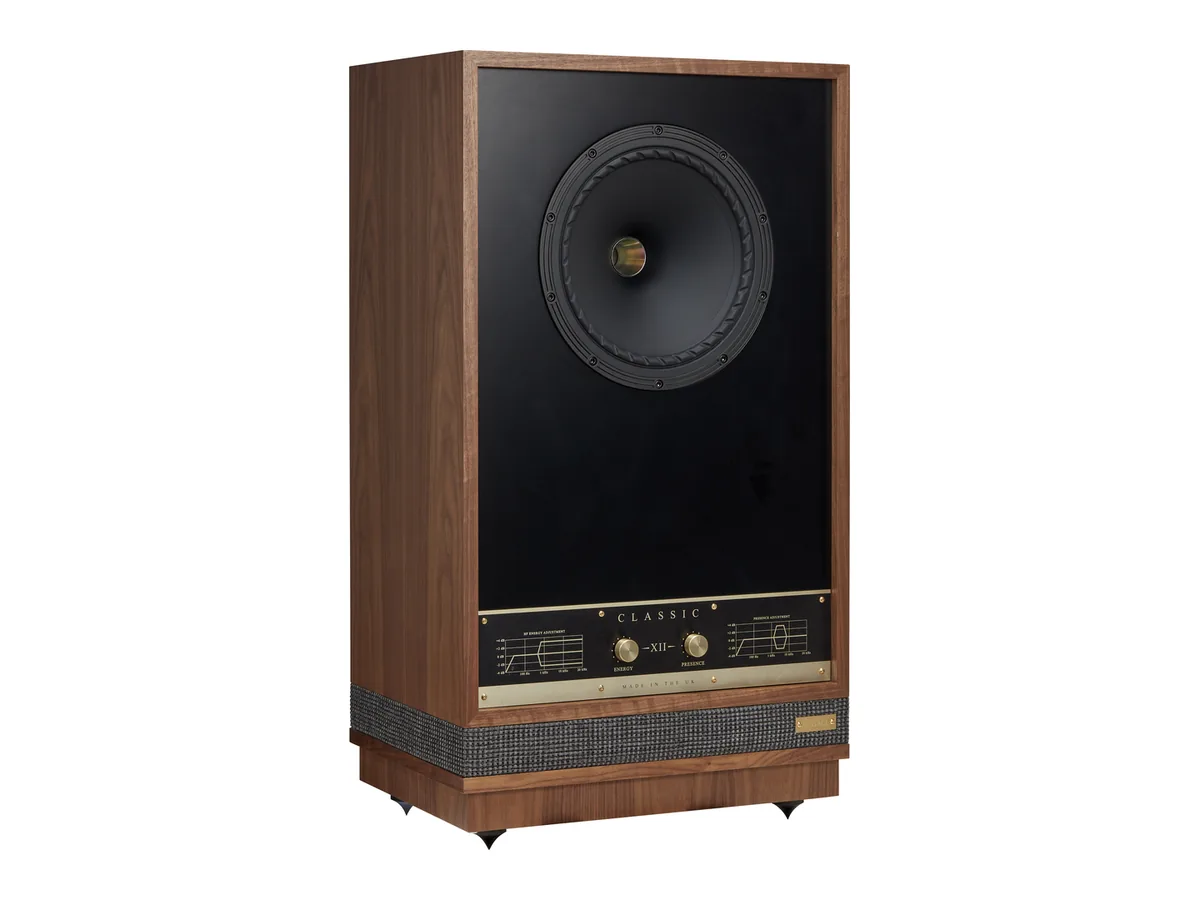
Vintage Classic
The Vintage Classic collection extends Fyne Audio's heritage concept to a broader audience: classic aesthetic rectangular cabinets—wider than they are deep, featuring a black baffle and woven fabric grille—housing contemporary acoustic engineering. It comprises a standmount monitor and three floorstanding models.
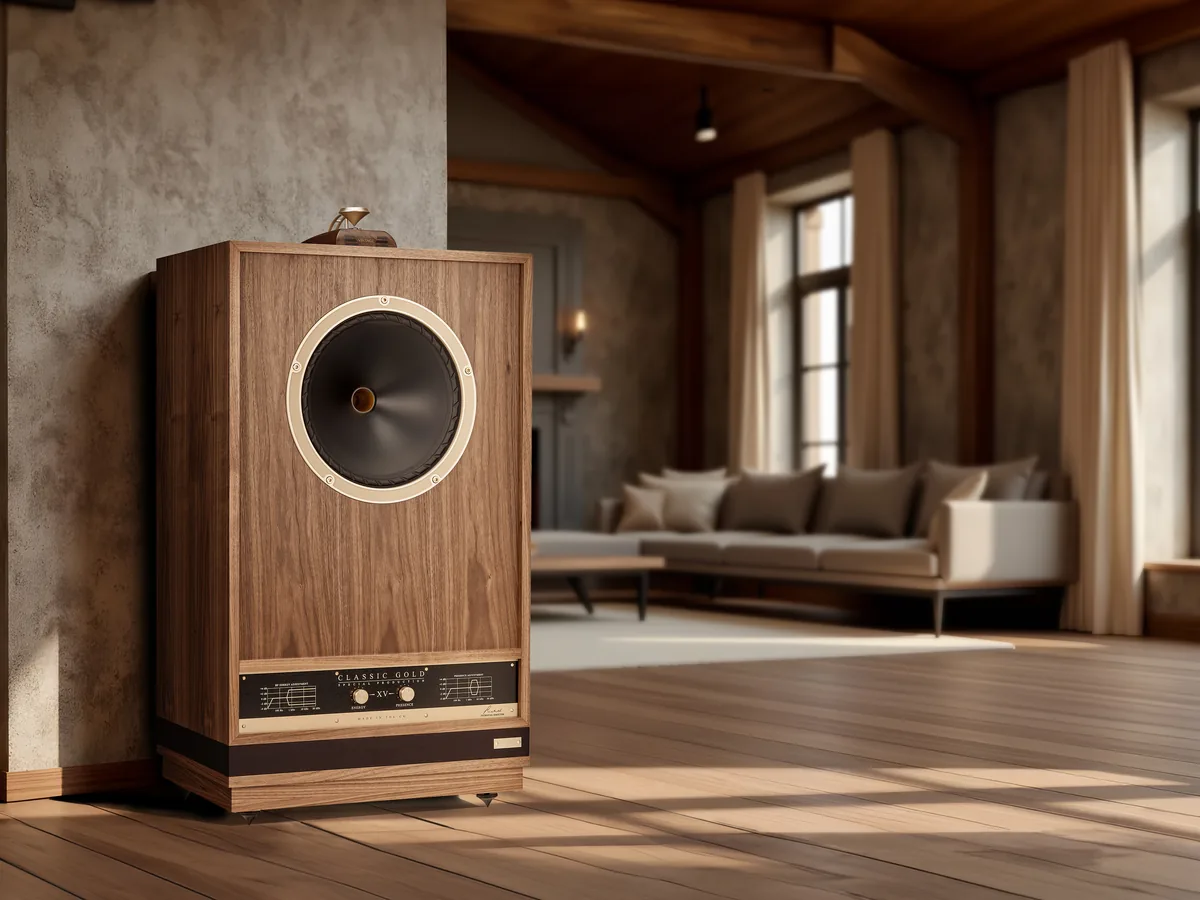
Vintage Classic Gold SP
The Vintage Classic Gold SP special edition enhances the heritage Vintage Classic collection: it retains the iconic rectangular cabinet but is constructed from high-density birch plywood and equipped with the upgraded IsoFlare drivers from the flagship Vintage range. It comprises four columns of 8, 10, 12, and 15 inches.